Why AI chatbots miscount drawings
Given a drawing as an image, an AI chatbot reads a picture, not geometry. What published tests show, and how Vextrus keeps models out of measurement.
Quantity takeoff is the work of measuring every item of a building from its drawings: the concrete, the brickwork, the plaster, the doors, the bars. Done by hand, a QS measures every line. In Vextrus, the machine drafts the whole model from the Drawing Set, and the QS verifies it by exception before anything counts.
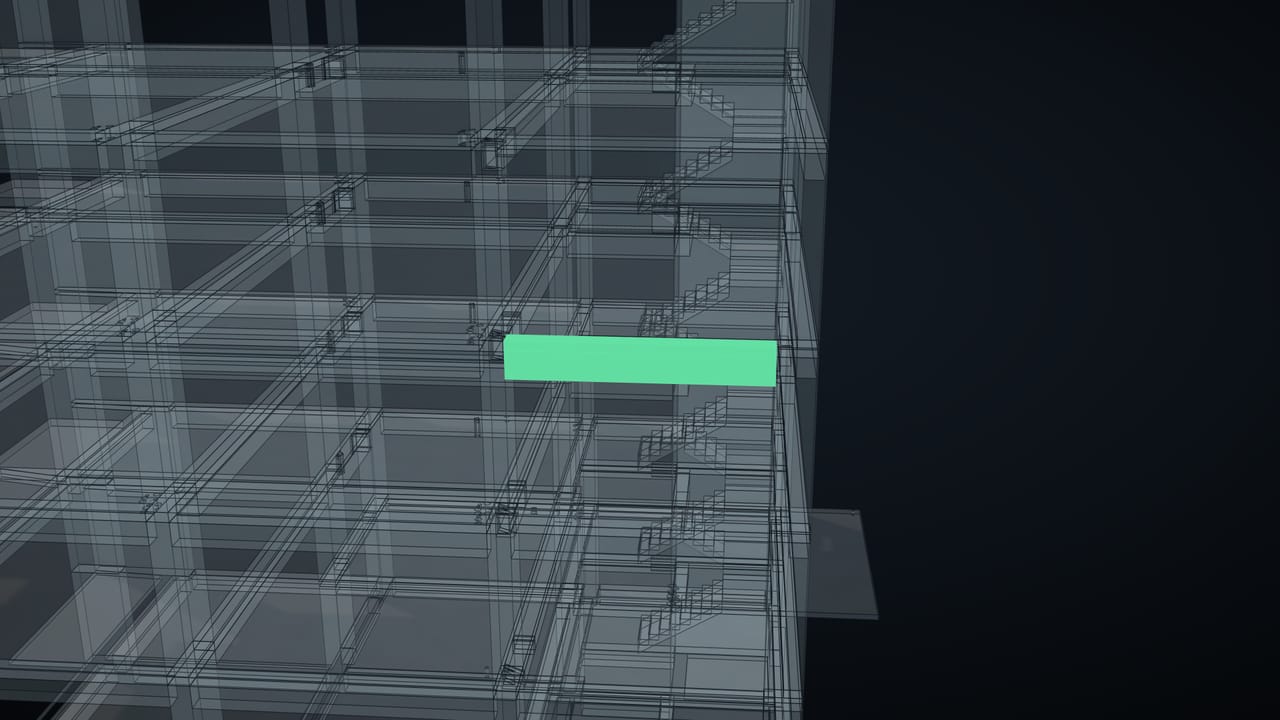
A quantity takeoff gives every item of work a quantity that can be priced, bought against and checked. The quantities fill the BOQ and, priced, the Estimate. They also say what to buy for each floor, what each labour contractor’s scope is, and what a running bill may claim. A takeoff is only as useful as it is traceable.
Traceable means that anyone can take a quantity and find the lines it was measured from. That is why a QS keeps measurement sheets: No. × L × B × H, the quantity in its unit, the deductions named. In Vextrus every quantity has that measurement sheet behind it, and each line opens its place on the drawing.
Manual quantity takeoff is measuring by hand: the QS reads each sheet, takes the dimensions of each Element, writes them as lines on a measurement sheet, works out each line, totals them and carries the totals into the BOQ. It is careful, skilled work, and every line can be re-checked by another QS.
Its limits come from the same hand. Every line is measured one at a time. A sheet that was never opened leaves no mark on the measurement sheets, so what was missed is hard to see. And when a Revision arrives, the QS has to find what moved and re-measure it, item by item.
Digital quantity takeoff measures on screen instead of on paper: the QS clicks the lines of a drawing and the software records lengths, areas and counts. Some tools add automatic detection, which marks items for the QS. Either way, the result still needs a person’s check, because a missed or wrong area is quiet until someone looks.
A published test (Sadeh, Geloso & Todorov, ASC Annual Conference, 2026) set one AI takeoff tool against a contractor’s own takeoff of one commercial building, 29 items, and found areas the tool had under-measured. That is the reason the check stays with a person.
12 of 15
Against a contractor's takeoff, an AI tool under-measured 12 of 15 areas.
The quantity takeoff method is to measure the building in the order it is built, each kind of Element in turn, under one set of measurement rules, with checks before the totals are trusted. Measuring in building order means each type is settled before the next type rests on it.
In Vextrus that order is the Takeoff Steps: the sheets; the general notes and specification; storeys and levels; the grid; foundations and substructure; columns, shear walls and the core; beams; slabs; stairs; tanks; walls and openings; rooms and finishes; the roof; site works; then each Discipline’s own drawings. The rules are the Developer’s Rule Set, every assumption a visible parameter. The checks hold what was read against something independent of it: a schedule against its plan, typical floors against each other, kg of Rebar per unit volume of concrete, area ratios.
The Measurement Sheet
A synthetic example: the slabs of the plan
RCC 1:1.5:3 in suspended floor slab, 5" thick (cft)
| Element | Nos | L | B | H | Quantity (cft) |
|---|---|---|---|---|---|
| Slab panel S14-5/A-B, 4-5/C-D | 2 | 14'-6" | 11'-9" | 0'-5" | 141.98 |
| Slab panel S22-3/A-B, 2-3/C-D, 3-4/A-B, 3-4/C-D | 4 | 13'-6" | 11'-9" | 0'-5" | 264.38 |
| Slab panel S31-2/A-B, 1-2/C-D, 5-6/A-B, 5-6/C-D | 4 | 12'-0" | 11'-9" | 0'-5" | 235.00 |
| Slab panel S42-3/B-C | 1 | 13'-6" | 15'-0" | 0'-5" | 84.38 |
| Slab panel S51-2/B-C, 5-6/B-C | 2 | 12'-0" | 15'-0" | 0'-5" | 150.00 |
| Slab panel S64-5/B-C | 1 | 14'-6" | 15'-0" | 0'-5" | 90.63 |
| Stair and lift core: no slab (measured with the stair)3-4/B-C | 0.00 | ||||
| Total | 966.37 | ||||
A quantity takeoff measures the work; a material takeoff turns that work into the materials to buy. Concrete is measured in cft of RCC; the material takeoff turns it, through the Mix, into cement bags, sand and stone chips, with Wastage added for cutting, breakage and spillage.
In Vextrus the material takeoff is the Material Schedule: the basic materials the Building needs, by floor and by Construction Stage, derived from the same takeoff as the Priced BOQ. Wastage enters the Material Schedule and never a BOQ quantity, which is measured net. See Materials in Vextrus.
Vextrus does quantity takeoff in two hands: the machine drafts and the QS verifies. The QS uploads the whole Drawing Set once and confirms a few one-click convention cards; the machine drafts every Element Family in building order, each Element with its Trace and its Measurement Lines; and the QS reviews it by exception, type by type, on the drawing.
The review has four safeguards, all required, because people follow wrong machine suggestions, experts included:
Exceptions are grouped by issue type, so one ruling settles a whole group, and one fix can be offered to every similar Element as one act the QS can revert. A Proposal counts toward nothing until the QS confirms it, and every Confirmation is written to the Journal. See the Takeoff in Vextrus and how it fits the whole workflow.
See every article on the Learn page, and the terms in the glossary.
A spot-measure is a blind check by hand. In Vextrus, before accepting a type of Element, the QS measures two or three random items of that type without seeing the machine's figures. A difference beyond the type's tolerance holds the type and draws more items; a second miss opens the whole type to one-by-one review.
Unclaimed geometry is drawing that sits on a type's layers but belongs to no drafted Element. Vextrus draws it in its own colour as one issue group; each piece is traced or dismissed with a reason, and the type cannot be accepted until it is examined. What the machine missed is shown, not hidden.
It means Coverage: every view on every sheet of the Drawing Set is assigned to the Takeoff Steps that read it, used by them, or excluded with a reason. Nothing is silently unread. Vextrus also checks the Drawing List both ways against the consultant's list, and a Discipline with no drawings becomes a Question, never a zero.
The QS: the quantity surveyor or estimation engineer, at the Developer or working for it, who measures quantities from drawings and prices them. In Vextrus the QS confirms the set's conventions and verifies the drafted model by exception; the machine drafts, and no Element is confirmed automatically.
Given a drawing as an image, an AI chatbot reads a picture, not geometry. What published tests show, and how Vextrus keeps models out of measurement.
How a QS prepares a BOQ from 2D drawings: measure each Element as No. × L × B × H, total the lines into BOQ Items, price each item. Then the Vextrus way.
A BOQ, or bill of quantities, lists every item of work in a building with its quantity and unit. What it holds, who makes it, and what Vextrus adds.
Drawn once. Every number traced.